
Article Plan: Axxis Bosch Washer Manual
This comprehensive guide details the Axxis Bosch washer, covering troubleshooting, test programs, disassembly, and model specifics. It leverages online resources,
manuals, and schematics – including appliantology.org – for complete support.
The Bosch Axxis washing machine series, particularly models like the WFR 2450 and WFR 2460, represents a blend of German engineering and laundry innovation. These washers, often compact at 24 inches, were designed for efficient cleaning and durability, becoming popular choices for households seeking reliable performance. Understanding the Axxis line requires recognizing its focus on high-efficiency operation and a range of wash cycles tailored to various fabric types and cleaning needs.
Historically, Axxis washers catered to a market valuing both space-saving designs and advanced washing technology. Resources like appliantology.org offer extensive documentation, including full manuals detailing troubleshooting, service procedures, and model-specific information. The availability of these resources underscores the enduring relevance of these machines, even as newer models emerge.
This guide aims to consolidate essential information for Axxis owners and technicians, providing a pathway to effective maintenance, repair, and optimal operation. From understanding error codes to performing detailed cleaning procedures, this manual will serve as a valuable resource for maximizing the lifespan and performance of your Bosch Axxis washer.
Understanding Axxis Washer Models
The Axxis series encompasses a range of Bosch washing machine models, each with subtle variations in features and specifications. Key models include the WFL2090UC (Axxis Series 24 High Efficiency) and the Nexxt 500 Plus Series, alongside the WFR 2450 and WFR 2460. Identifying your specific model is crucial for accessing the correct documentation and parts.
Variations often center around wash cycle options, spin speeds, and energy efficiency ratings. Some models prioritize quick wash cycles, while others offer more specialized programs like ‘Sanitary’ for enhanced hygiene. The Nexxt 300 Series (WFMC2201UC) represents another distinct line within the broader Bosch offering.
Service manuals, available through resources like appliantology.org, often cover multiple related models, acknowledging commonalities in their internal components and operating principles. However, always verify compatibility before applying service procedures. Understanding these nuances ensures accurate diagnosis and repair, extending the life of your Axxis washer and maintaining optimal performance. Careful attention to model numbers is paramount when seeking assistance or replacement parts.
Locating the Manual: Online Resources
Finding the correct manual for your Axxis Bosch washer is often easiest online. Appliantology.org stands out as a premier resource, hosting a dedicated section for Bosch washing machine service manuals, including comprehensive guides (58 pages) detailing troubleshooting, test programs, and disassembly procedures.
Bosch’s official website (bosch-home.com) provides user manuals and installation instructions for current models like the WGA1440XZA. These resources typically offer downloadable PDFs covering operation, care, and safety guidelines. Searching by model number is essential for accurate results.
Additionally, various appliance parts retailers and online forums may archive older manuals. Websites specializing in appliance repair often compile documentation for discontinued models. Remember to exercise caution when downloading files from unfamiliar sources, ensuring they are free from malware. Utilizing these online platforms streamlines the process of accessing vital information for maintaining your Axxis washer, saving time and effort compared to traditional methods.
Manual Contents Overview: Key Sections
A typical Axxis Bosch washer manual is structured to provide comprehensive guidance. Core sections begin with crucial Safety Precautions & Warnings, outlining potential hazards and safe operating procedures. Installation Instructions detail proper setup, including water and electrical connections.
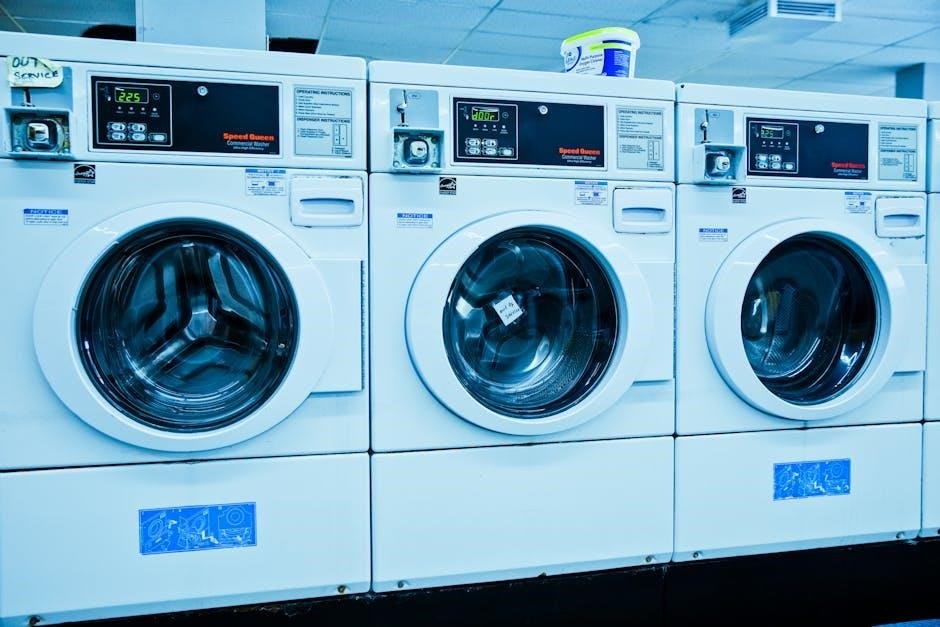
Operating Instructions cover basic wash cycles and control panel functions. A Detailed Wash Cycle Guide explains optimal settings for various fabrics – cotton, normal, sanitary, and quick wash – ensuring effective cleaning and garment care. The Control Panel Explanation deciphers each button and display indicator.
Troubleshooting addresses common issues, offering solutions for malfunctions. Error Codes and Their Meanings provide diagnostic information for more complex problems. Maintenance and Cleaning sections detail procedures for detergent dispenser care and drum cleaning. Advanced manuals (service manuals) include Disassembly and Reassembly instructions, Test Programs, and Technical Specifications & Dimensions.
Safety Precautions & Warnings
Prioritizing safety is paramount when operating an Axxis Bosch washer. The manual emphasizes disconnecting the appliance from the power supply before any maintenance or cleaning. Warning: Electrical shock hazard – never operate with a damaged power cord or if submerged in water.
Caution: Improper installation can lead to water leaks or electrical hazards. Always follow the Installation Instructions precisely. Keep children and pets away from the washer during operation, as the drum can reach high temperatures. Do not attempt to repair the appliance yourself; contact a qualified technician.
Important: Use only detergents specifically designed for washing machines, and adhere to the manufacturer’s recommended dosage. Avoid flammable liquids or solvents near the washer. Never open the door during a wash cycle, as pressurized water could cause injury. The manual details proper procedures for Transporting and Moving the washer to prevent damage and ensure safe handling.
Installation Instructions
Proper installation is crucial for optimal performance and longevity of your Axxis Bosch washer. Begin by carefully unpacking the appliance and inspecting for any shipping damage. Ensure the installation surface is level and can support the washer’s weight, especially when fully loaded with water and laundry.
Connect the water inlet hoses to the hot and cold water supply, verifying a secure, leak-proof connection. The manual details proper hose installation techniques. Connect the drain hose to a standpipe or laundry tub, ensuring it’s securely positioned to prevent siphoning. Electrical connection requires a grounded outlet matching the washer’s voltage specifications.
Adjust the leveling feet to eliminate any wobble and ensure stability. Refer to the manual for detailed diagrams and instructions. After installation, perform a test cycle to check for leaks and proper operation. Warning: Incorrect installation can void the warranty and create safety hazards. Always consult a qualified technician if unsure about any step.
Operating Instructions: Basic Wash Cycles
The Axxis Bosch washer offers a variety of wash cycles to accommodate different fabric types and soil levels. To begin, load laundry, ensuring not to overload the drum. Add detergent to the dispenser, following the manufacturer’s recommendations. Select the appropriate wash cycle using the control panel – options include Cotton, Normal, Sanitary, and Quick Wash.
For everyday cottons and linens, the ‘Cotton’ cycle provides a thorough clean. ‘Normal’ is suitable for moderately soiled items. The ‘Sanitary’ cycle utilizes higher temperatures to eliminate bacteria, ideal for bedding and towels. The ‘Quick Wash’ cycle offers a faster, gentler wash for lightly soiled clothes.
Press the ‘Start’ button to initiate the cycle. The washer will automatically fill with water, wash, rinse, and spin. Always refer to the garment care labels before selecting a cycle. Understanding these basic cycles is fundamental to effectively using your Axxis Bosch washer.
Detailed Wash Cycle Guide (Cotton, Normal, Sanitary, Quick Wash)
The ‘Cotton’ cycle, designed for durable cotton items, utilizes a robust wash action and higher temperatures – typically around 140°F (60°C). It’s ideal for bedding, towels, and work clothes. The ‘Normal’ cycle offers a balanced approach, suitable for everyday laundry with moderate soil levels, using a temperature around 104°F (40°C).
For hygiene-critical loads, the ‘Sanitary’ cycle employs a high-temperature wash (typically 158°F/70°C) to eliminate bacteria and allergens. This is perfect for baby clothes, linens, and items requiring deep cleaning. The ‘Quick Wash’ cycle, lasting approximately 30 minutes, is best for lightly soiled garments needing a refresh. It uses cooler water and a gentler wash action.
Adjusting cycle parameters – such as spin speed and temperature – is possible via the control panel. Always consult garment care labels to ensure compatibility with the selected cycle. Proper cycle selection maximizes cleaning performance and protects your clothes.
Control Panel Explanation
The Axxis Bosch washer’s control panel features a central dial for cycle selection, encompassing options like ‘Cotton,’ ‘Normal,’ ‘Sanitary,’ and ‘Quick Wash.’ Digital displays indicate cycle progress, remaining time, and error codes. Push-buttons allow for modification of wash parameters.
Key buttons include ‘Start/Pause,’ initiating or interrupting the wash cycle; ‘Temperature,’ adjusting water temperature; ‘Spin Speed,’ controlling the final spin intensity; and ‘Options,’ accessing features like ‘Extra Rinse’ or ‘Delay Start.’ Indicator lights illuminate to show selected settings.
The ‘Add Garment’ function (on some models) allows pausing the cycle to add forgotten items. Understanding the symbols – representing water temperature, spin speed, and cycle type – is crucial for optimal operation. Refer to the manual for a detailed breakdown of each button and indicator light’s function.
Troubleshooting Common Issues
Common Axxis Bosch washer problems often involve drainage issues, error codes, or failure to start. If the washer doesn’t drain, check the drain hose for kinks or obstructions. A clogged drain pump filter is another frequent cause – locate and clean it carefully.
For error codes, consult the manual (or online resources like appliantology.org) to decipher the meaning and recommended action. If the washer won’t start, verify the power supply and ensure the door is securely latched. Check the water inlet valves for proper function.
Excessive vibration can indicate an unbalanced load; redistribute the clothes. Leaking water may stem from loose hoses or a faulty door seal. Always disconnect power before attempting any repairs. Refer to the service manual for advanced troubleshooting steps and component testing.

Error Codes and Their Meanings
Axxis Bosch washers utilize error codes to signal malfunctions, aiding in diagnosis. “F16” typically indicates a heating issue, potentially a faulty heating element or temperature sensor. “E09” signals a drainage problem, often a blocked drain pump or hose. “E11” points to a water supply issue, like low water pressure or a faulty inlet valve.
“E22” suggests an imbalance, requiring load redistribution. “F06” indicates a communication error between the control board and other components. “E04” signifies a water level sensor problem, potentially requiring replacement. Consult the washer’s manual (or resources like appliantology.org) for a complete list and specific remedies.
Some codes may require professional service. Resetting the washer by disconnecting power for a few minutes can sometimes clear minor errors. Always note the full error code for accurate troubleshooting. Ignoring error codes can lead to further damage.
Maintenance and Cleaning
Regular maintenance extends the life of your Axxis Bosch washer. Monthly cleaning of the detergent dispenser prevents residue buildup, ensuring optimal performance. Inspect and clean the door seal to prevent mold and mildew growth, wiping it down after each use. Run a drum cleaning cycle (using a washer cleaner) every three months to eliminate odors and residue.
Periodically check the drain pump filter for lint, coins, and other debris. Wipe down the exterior with a damp cloth and mild detergent. Avoid abrasive cleaners that can damage the finish. Inspect hoses for cracks or leaks, replacing them as needed.
Proper ventilation is crucial; ensure the area around the washer is well-ventilated. Leave the door slightly ajar after use to allow the drum to dry, preventing mildew. Refer to the manual for specific cleaning recommendations and schedules.
Detergent Dispenser Guide
The Axxis Bosch washer’s detergent dispenser features compartments for pre-wash detergent, main wash detergent, and fabric softener. Always use HE (High Efficiency) detergent, as standard detergents create excessive suds, potentially damaging the machine. Refer to the detergent manufacturer’s instructions for proper dosage based on load size and soil level.
The ‘I’ symbol indicates the main wash compartment, typically used for most wash cycles. The ‘II’ symbol is for pre-wash detergent, utilized for heavily soiled items. The flower symbol designates the fabric softener compartment; do not exceed the maximum fill line.

Liquid or powder detergent can be used, but powder may require occasional cleaning of the dispenser to prevent clumping. Regularly clean the dispenser by removing it and rinsing with warm water. Ensure the dispenser is properly reinserted after cleaning to avoid leaks or malfunctions.
Drum Cleaning Procedures

Maintaining a clean washer drum is crucial for optimal performance and preventing odors. Bosch recommends performing a drum cleaning cycle at least once a month, or more frequently with heavy use. Utilize a washer cleaner specifically designed for front-load machines; bleach can damage internal components.
To initiate the drum cleaning cycle, ensure the drum is empty. Pour the recommended amount of washer cleaner into the detergent dispenser. Select the highest temperature setting (typically 90°C or 194°F) and a long wash cycle, such as ‘Cotton’ or ‘Sanitary’. Run the complete cycle without any laundry.
For stubborn residue, consider a second cleaning cycle. Wipe down the rubber door gasket after each cleaning to remove any lingering debris. Leave the door slightly ajar after use to allow the drum to air dry, preventing mildew growth. Regular cleaning extends the life of your Axxis washer.
Transporting and Moving the Washer
Proper preparation is essential when transporting your Axxis Bosch washer to prevent damage. Before moving, disconnect the power and water supply. Drain all remaining water from the washer, including the drain hose. Secure the shipping bolts – these are typically located on the rear panel and stabilize the drum during transit. Refer to your installation instructions for their exact location and tightening procedure.
Carefully tilt the washer (avoiding extreme angles) and use a hand truck or appliance dolly for movement. Protect the exterior with blankets or moving pads to prevent scratches. Avoid dropping or bumping the washer during transport.
Upon reaching its new location, remove the shipping bolts before operating the washer. Failure to do so will cause significant damage. Reconnect the water supply and power, and verify proper operation. Consult the manual for detailed instructions regarding shipping bolt removal and re-installation.
Disassembly and Reassembly (Service Manual Focus)

Disassembly of an Axxis Bosch washer should only be undertaken by qualified technicians referencing the full service manual available on sites like appliantology.org. This process involves disconnecting electrical components, carefully removing panels, and accessing internal parts like the motor, pump, and drum assembly.
Detailed diagrams and step-by-step instructions within the service manual are crucial for proper component identification and removal. Always disconnect power before beginning any disassembly. Document the location of all screws, wires, and connectors to facilitate reassembly.

Reassembly requires meticulous attention to detail, ensuring all components are correctly positioned and securely fastened. Verify proper wiring connections and panel alignment. Test all functions after reassembly to confirm the washer operates correctly. Improper reassembly can lead to malfunctions or safety hazards; professional service is recommended for complex repairs.

Test Programs and Service Mode Access
Accessing the service mode on an Axxis Bosch washer allows technicians to run diagnostic test programs, verifying the functionality of various components like the motor, heater, and sensors. The service manual (found on appliantology.org) details the specific key combinations required to enter this mode – procedures vary by model.
Test programs cycle the washer through pre-defined routines, allowing observation of component operation. These tests can identify faulty parts without requiring full disassembly. Carefully document any error codes displayed during testing, as these provide valuable diagnostic information.
Service mode access should only be performed by trained personnel. Incorrect operation can potentially damage the washer or void the warranty. The manual outlines safety precautions and proper procedures for exiting service mode after testing is complete. Always prioritize safety and consult the manual before attempting any advanced diagnostics.
Technical Specifications & Dimensions
The Axxis Bosch washer, such as the WAS24460UC model, is a 24-inch compact washing machine, designed for space-saving installations. Typical dimensions are approximately 24 inches wide, 27 inches deep, and 33.5 inches high, though variations exist between models. Weight generally ranges between 200-250 pounds, depending on features.
Technical specifications include a wash capacity of around 2.2 cubic feet, suitable for smaller loads. Energy efficiency is a key feature, often exceeding Energy Star standards. Voltage requirements are typically 120V/60Hz, with a standard power cord. Water consumption varies by cycle, but generally falls within the range of 8-15 gallons per wash.
The washer utilizes a variety of wash cycles, including cotton, normal, sanitary, and quick wash, each with specific parameters. Detailed specifications are available in the user manual and on the Bosch home website (bosch-home.com), providing comprehensive information for installation and operation.